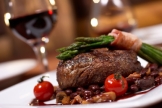


The white stuff on salmon is called albumin. Albumin is a protein that exists in the fish in liquid form when it’s raw that coagulates and becomes semi-solid when you subject the salmon to heat when cooking. As the meat cooks, the coagulated albumin gets squeezed out and becomes a white coating.
The more aggressively you cook your salmon the more albumin will appear on its surface.
Think of what happens when you wring out a wet towel. The water inside the fibers of the cloth is pushed out as you squeeze the fibers closer together. The same principle applies to salmon. As salmon cooks, the flesh contracts, pushing out albumin to the fillet’s surface. The higher the heat, the more quickly the flesh contracts, and the more albumin becomes visible.
To have as little albumin as possible visible on your finished dish, follow these guidelines:
- Cook your salmon at a lower temperature for a longer amount of time. It’s gentler on the fillet, resulting in a super-tender piece of fish with less nasty white stuff.
- If you are searing salmon (and fish in general), always do so with the skin side down. The skin acts as a protective barrier between the fish and the hot metal pan. **TIP: Even if you plan on taking the skin off, cook your fish skin-side down for 90% of the way, turn off the heat, and then flip the fish so the skinless side cooks on the pan’s residual heat.
- Don’t overcook your salmon. You want it medium to medium-rare in the center, still a bit translucent. Overcooking salmon is the easiest way to get albumin everywhere. **TIP: When you can push on the top of your salmon with a fork, and the the layers of flesh separate easily and seem moist, your fish is finished cooking.
Thanks to my friends at Epicurious for the cooking tips! #ThisGirlLovesToEat

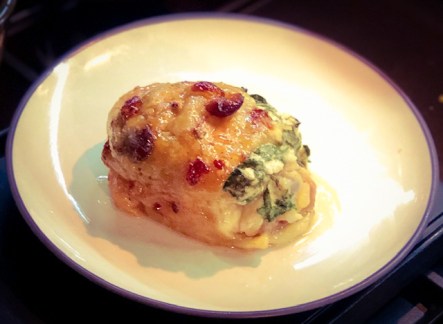
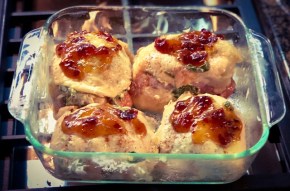


 On days like today, when I can have a breakfast that isn’t on the run, I love making a fried egg sandwich. That I can choose between using olive oil spray and butter, depending on my fat needs for the day, to make it #KetoPerfect, makes me even happier! #ThisGirlLovesToEat
 Using a spoon to control flow, add most of your egg white to the pan until and let it cook until a solid base starts to form (about 30 seconds). Then, using your spoon to make sure you keep your yolk centered, add the rest of your egg on top of the set white in the pan. Cook about 2 minutes and gently turn your egg. Place your slice of cheese on top of the egg. Cook another 30 – 45 seconds for a perfect Over-Medium.
 If desired you can add warmed ham, bacon, or Canadian bacon if you have some pre-made.
 Deciding how you spend your carb allowance, when you are following a #KetoLifestyle, presents you with many options, depending on what stage of Keto you are at. When you are in your induction and weight loss phase, smoothies are generally not the way to spend your day’s allotted carbohydrates, but this one tops out at 9 Net Carbs so it can be included from day 1. This light and frothy smoothie a great #PickMeUp for that late afternoon slump plus it gives you a big protein, vitamin and fiber boost without piling on the calories.



 Keith Schroeder of
 I’m a savory snack girl, but don’t want to completely derail my hard earned Keto gains by cheating with a bag of store bought potato chips. What’s a snacker to do? This snacker chooses to spend her carbs on a healthier version of sweet potato chips, without the store bought preservatives and additives. #ThisGirlLovesToEat
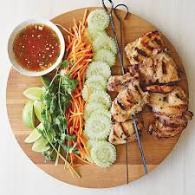
 One way to meal prep for the week is to do kebabs in the air fryer. Not only is it fast, but it’s a perfect way to measure out exactly what you’re eating. Today I made chicken kebabs and put them together with 3 different sides for 3 different healthy meals this week. These can easily be laid atop a bed of fresh spinach topped with olive oil and salt & pepper, beside a green salad, or on a mound of cauliflower mash. Except for needing to remove and heat the kebabs separately with the salad, it’s a quick & easy minute in the microwave for a hearty weekday lunch or dinner. #ThisGirlLovesToEat


 This Girl Loves to Eat!