
Realizing that #leftoverwine is an oxymoron, the occasion did present when a high quality bottle was opened at the end of a multi-bottle evening and not finished, then said bottle was put into the wine cellar and forgotten for a week past it’s drinking window. Shit!
Time to make some red wine vinegar! I left the bottle, corked, in the dark, cool cellar for an additional month then set to starting my kitchen #chemistryexperiment.
Vintage Red Wine Vinegar
- Up to 750 ml leftover Red Wine of any variety – in this case, I used: 3/4 bottle Eighty Four Wines 2013 Malbec out of Napa, CA + about 1/4 bottle Bodega Y Vinedos Catena 2019 Malbec out of Argentina
- 1/2 tsp (2.5 ml) 3% Hydrogen Peroxide (if wine contains sulfites)
- 1 cup (237 ml) Unchlorinated Water
- 1/2 cup (118 ml) Raw, Unfiltered, Unpasteurized Vinegar, or a Vinegar Mother – I used Bragg Organic Raw-Unfiltered Apple Cider Vinegar With the Mother
Pour the wine into a dry, sanitized, wide-mouthed, sealable (canning) jar that holds at least a quart. If the wine contains sulfites (it will say so on the back of the bottle), stir in the hydrogen peroxide and let the wine sit for about a minute to neutralize them. Stir in the water with a wooden spoon.
Stir in the raw vinegar well to oxygenate the wine.
Cover the jar with either tightly-woven, quadrupled cheesecloth or a piece of muslin, even a thick paper towel, securing with rubber band/string/a screw on metal canning band, or, like I used, 😉 a zip tie to keep fruit flies out. You can cover it with a paper coffee filter for extra protection from fruit flies if desired. The jar needs to breathe (vent its Carbon dioxide) so do not, under any circumstances, put the metal inner jar canning lid or glass clamped vacuum lid on to seal.
Place your jar on the counter, out of direct light, or in a cupboard, where the temperature stays between 65° and 75°F. The longer you leave it alone to fully develop it’s acidity, especially if you have blended more than one type of wine, the better. Ideally, leave it alone a minimum of one month before checking your acidity level. Your ph should be 4.0 or below.
Bottle half of the vinegar, in a pressure resistant bottle, leaving headspace and replace with the same amount of wine for another batch. Or, you can bottle it all, storing the mother (1/2 C) for another batch or to share with a friend to make her own.

The vinegar can be used immediately (stored in the refrigerator if you like the flavor as it is) or aged longer in your cupboard or on the cool counter top to allow it to mellow further and the flavors to develop more fully.
- Troubleshooting: Most fermenting problems with vinegar come from trying to ferment in temperatures that are too warm for the fermentation process. Try to keep your jars in a room that’s between 55 and 75°F.
- Surface growth: If you see anything “scummy” starting to grow on your vinegar while it’s fermenting, scoop off the surface growth. If it smells fine, it is fine.
- Over-Fermenting: If your vinegar develops an awful smell (like rotting garbage), toss it out. If it smells a little funky (like vinegar), it’s probably fine.
- Mold Growth: If you’re having problems with mold growing on the vinegar (not simply white scum on the top), toss out the vinegar. Next time, make sure your vinegar is fermenting in a room that’s not above 75 degrees, and is in a place with good airflow.
Are you on Facebook? You might be interested in the things I may not devote an entire blog post to: food news, recipes, food facts, nutritional information, photos and other things that make my mouth water. If so, visit my This Girl Loves To Eat community at: https://www.facebook.com/ThisGirlLovesHerFood


 Today, for my alcohol enjoying #Keto followers, I’m sharing an excerpt from an article in #HealthMagazine from November of 2018. #ThisGirlLovesHerDrinks


 Fruit and Spice
 (except white chocolate) or has the gooey richness of caramel’s toffee goodness, then the wines you’re looking for will be Red. Late-harvest Pinot Noir, Banyuls, Grenache, Australian Shiraz, Port (the classic chocolate pairing), and Grappa all are excellent pairings for these rich dessert choices.
 I love a big, juicy cheeseburger but they can get boring after a while. This recipe is one that will definitely take away the boredom and might even be one that I can whip out at a tailgate this football season to change it up a bit!


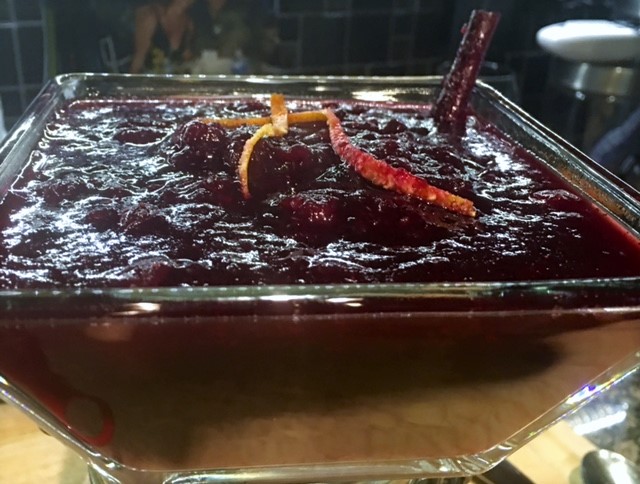
 Thanksgiving, someone was always assigned the task of bringing two cans of jellied and one of whole berry cranberry sauce. You couldn’t try and pull a fast one by buying store brand. It had to be Ocean Spray on Grandma’s Thanksgiving table!
 Once he achieved the wine world’s most coveted initials behind his name, M.S. (Master Sommelier), instead of heading off to some five-star fancy pants restaurant to show the upwardly mobile out to impress their friends, or those with more money than sense, his incredible wine knowledge, Jeff Keck opened up a HONKY TONK, yes, a Honky Tonk in Houston! That doesn’t mean he’s stepped away from his love of wine, indeed, far from it.
 yes, some wine too. There’s even a #RhinestoneCowboySpecial – a bottle of tête de cuvée Champagne and 12 tacos, prepared by his business partner, and chef, Felipe Riccio. As the recipe below shows, they’re far from your run-of-the-mill street tacos. I love Nashville Hot Chicken, so these should be right up my alley! #ThisGirlLovesToEat
 The September 2018

 This Girl Loves to Eat!