Zero Effort Chicken For Dinner

Between the humidity coming up from a storm in Mexico and the temperature gauge hovering around the century mark, cooking is the last thing I want to do, but with my surgery date now 10 days away, I know that I will be making very few meals for the family due to movement restrictions, so I’m doing the deed today. 😉

The pressure cooker is definitely a cook’s friend on days like this!  With this recipe you get a bonus of 2 recipes in one!  The chicken, plus a bonus flavorful chicken stock that I am using as the base for my cabbage soup.  Yum!

chicken-on-cutting-boardChicken is the universal meat from which can spring any meal.  My Mom’s go-to was the Zacky Farm’s Cut up Whole Fryer, seems like a good place to start, so that’s where I’ll start.  I’ll make it early today and then the mood I’m in about an hour before dinnertime will determine how it ends up being served.

Zero Effort Pressure Cooker Chicken + Yummy Chicken Stock

  • 1 – 3 1/2 to 4 1/2 lb fryer chicken (cut up)
  • 2 TBLS Olive Oil
  • Zatarain’s Cajun Spice Mixture (Seasoned Salt)
  • 1/2 Medium Yellow Onion
  • 1 – Large Poblano Pepper
  • 5 Cloves Garlic

It should only take you 5 minutes to get all of the ingredients into the pressure cooker.  After that it’s pretty much set it and forget it!

  1. Set your pressure cooker to the “Brown” setting.
  2. Pour the Olive Oil into the pressure cooker pan
  3. Cut the pepper in half, remove the seeds and veins, then cut into about 1″ chunks and place into pan
  4. Peel and chop the onion into roughly 1″ chunks and add to pan
  5. Peel the garlic and add to pan
  6. Sprinkle the Zatarain’s seasoning on both sides of the chicken
  7. Place each piece of the chicken, skin side down (or on edge so skin is in contact with the sides of the pan) into the pan on top of the vegetables
  8. Allow the chicken to brown, undisturbed for about 20 minutes, then close the lid of the pressure cooker and set to cook under pressure for 30 minutes
  9. When cooking cycle has ended, allow the pressure to return to normal naturally

At the end of the keep warm cycle, release the lid and remove the chicken from the cooker to a large bowl.  It should be falling off the bones.  I take the time to remove the bones, skin and cartilage at this point and use a fork to do a gentle separation of the meat.

Leave the remaining vegetables and garlic in the pan with the meat drippings.  Skim ant visible fat and allow to cool.

If you aren’t using it immediately in another recipe, move the cooled Yummy Chicken Stock to a sealable container and refrigerate (up to 5 days) or freeze until ready to use.

Are you on Facebook?  You might be interested in the things I may not devote an entire blog post to: recipes, food facts, nutritional information, photos and other things that make my mouth water. I may not write a blog post every day, but there are daily updates to my This Girl Loves To Eat community at: https://www.facebook.com/ThisGirlLovesHerFood

Cleansing Ginger Chicken Soup

gingerchickensoup

Food’s not forbidden on The Prime, but I am not particularly hungry (a good thing) so this recipe for a light soup from the January 2012 issue of Bon Appetit Magazine, with ginger, whose anti-inflammatory properties my body is sorely (pun intended!) in need of, as one of its key ingredients, is definitely on tonight’s menu.  After reading the reviews I made a few of the suggested additions and it made a really tasty soup.

Cleansing Ginger-Chicken Soup

  • 1-2 TBLS Extra Virgin Olive Oil
  • 1/2 Yellow Onion, Chopped
  • 4 Celery Stalks, Chopped
  • 3 Large Carrots, Peeled and Chopped into 1″ Pieces
  • 8 oz Unpeeled, Scrubbed Ginger, Cut into 1/2″ Pieces
  • 5 Garlic Cloves, Crushed
  • 1/2 Large Lemon (seeds removed)
  • 2-3 tsp freshly ground black pepper (or to taste)
  • 1 – 3lb Whole Organic Chicken, Cut into 7 pieces (2 Breasts, 2 Legs w/Thighs Attached, 2 Wings, 1 Back)
  • Cilantro Leaves
  1. In a large heavy pot, place chopped yellow onion, and the chicken, skin side down, in 1 to 2 TBLS Olive oil and cook long enough to brown slightly and pull the fat out of the skin.
  2. Add the garlic and continue to cook over low heat for about 5 minutes then add the celery, carrots, ginger, lemon, pepper and 5 quarts of water (preferably filtered or spring water); bring to a boil over medium-high heat. Cover with lid slightly ajar.
  3. Reduce heat to low; simmer  uncovered, until broth is fully flavored, about 2 hours.
  4. Remove chicken from broth. When cool enough to handle, coarsely shred meat; discard skin and bones.
  5. Place a fine-mesh sieve over another large pot; strain broth, discarding solids in strainer (you should have about 8 cups broth). Season with salt if needed.
  6. Rewarm soup.
  7. Divide chicken among bowls. Pour hot broth over, dividing equally. Garnish soup with cilantro leaves, if desired.

Are you on Facebook?  You might be interested in the things I may not devote an entire blog post to: recipes, food facts, nutritional information, photos and other things that make my mouth water. I may not write a blog post every day, but there are daily updates to my This Girl Loves To Eat community at: https://www.facebook.com/ThisGirlLovesHerFood

Cleansing Sucks. Prime Tea Makes it Better

17 Days until surgery is going to land me on my butt for 12 weeks and I have started the cleanse process.  It’s hard but I’m not feeling as rotten as when I did the Nektar Advanced Juice Cleanse in June to prep for my vacation.

PrintI read some great reviews on bn.com about a book by Dr. Kulreet Chaudhary, an Integrative Neurologist who found a way to combine the modern medical advances of Western taught Neurology with the centuries old wisdom of Ayurveda.

Despite the title, The Prime  Prepare and Repair Your Body for Spontaneous Weight Loss the book isn’t selling or even really talking about a diet.  That, far and above, was what appealed to me.

The main focus of The Prime is to eliminate the effects of stress, inflammation and toxicity on the body.  The effects can manifest as:

  • Bloating and Tiredness after eating
  • Migraine Headaches
  • Irritable Bowel Syndrome (IBS)
  • Diarrhea
  • Gas
  • Mental Cloudiness
  • Weight Gain
  • Depression
  • Anxiety

Dr. Chaudhary sought out complimentary Ayurvedic treatment options for her patients suffering from Multiple Sclerosis and Parkinson’s Disease and discovered that some of those patients were able to begin cutting back on the traditional pharmaceutical options that she (and other doctors) had been prescribing to them and they were seeing greatly improved quality of life.  It wasn’t any religious chanting, no special oils or anything other than a concentration on regaining the balance in their digestive system which then would allow their other internal organs and systems to detoxify so that the treatments they were receiving could have their maximum effect.

The best thing I read (by page 14 no less) was that a very simple adjustment to refresh the way the body digests food was resulting in:

  • Sharper and clearer mental focus
  • Skin regained elasticity, wrinkles began disappearing, skin brighter
  • Excess weight began falling away, puffiness disappearing
  • 10 pounds gone with no additional exercise and no diet changes
  • Energy returned
  • Less pain in joints
  • Fewer sleep problems
  • Fewer memory issues
  • Cravings for sugar and other foods that can lead to weight gain all but disappeared in addition to cravings for excessive sugar, alcohol and caffeine
  • Cholesterol, blood sugar, blood pressure levels returned to normal

Since there seemed to be so many pluses to this approach and it’s a very easy to follow cleanse that allows me to eat whatever I feel like eating, I gathered the herbs required and brewed my tea today.

Prime Tea

  • Boil 4 to 5 Cups of Water in a Pot
  • In a Tea Ball (Mine is aluminum mesh) combine
  • 1/2 tsp Cumin Seeds (I got my herbs at Sprouts but know that my Albertson’s has them in the spice aisle too)
  • 1/2 tsp Coriander Seeds
  • 1/2 tsp Fennel Seeds

Additional Options:

  • 1/2 tsp Manjistha Powder.  If you are particularly bloated (if your socks leave marks on your ankles when you take them off, your rings leave dents in your puffy fingers, etc.) you can add this to the steeped tea afterward (it’s a powder)
  • 1/2 tsp Fenugreek Seeds – if you are gassy
  • 1/2 to 1 inch Peeled Fresh Ginger – if you want to really get the digestive fire started

theprimeLet your tea steep in the boiling water at least 10 minutes, get rid of the seeds in the tea ball (you can leave the ginger in if you like) and drink it warm all day – finish by 6 so you’re not up peeing all night.

I made the tea today and have had no problem drinking it at all.  It’s got a pleasant kind of nutty flavor with a hint of the ginger.  I am going to the bathroom a lot more than I do taking my prescription Hydrochlorathiazide (water pill), so I think it’s doing the job.  I haven’t been hungry all day so hopefully it’s doing that job too. Fingers are crossed!

Are you on Facebook?  You might be interested in the things I may not devote an entire blog post to: recipes, food facts, nutritional information, photos and other things that make my mouth water. I may not write a blog post every day, but there are daily updates to my This Girl Loves To Eat community at: https://www.facebook.com/ThisGirlLovesHerFood

Prepping For an Unexpected Surgery

Sesamoiditis14 1/2 years ago I underwent a procedure to repair a broken sesamoid bone in my foot that had gone untreated, although I had sought help, for roughly two years.  When I finally had the source of my pain identified it resulted in a screw being inserted in my foot but the doctor was a bit aggressive in his treatment, his expectations of recovery, and then difficult when the treatment and surgery proved unsuccessful.  I had issues/side effects from medications he prescribed that resulted in weight gain that I still haven’t been able to shake and my foot hasn’t healed properly!

The pain finally sent me to a different surgeon and the x-rays told a story that is not going to have a happy ending without another, more invasive, surgery and 8-12 weeks down afterward.

Of course it needs to happen ASAP, but I have lasted this long, what’s 3 more weeks?  I’m already canceling a trip to St. Lucia, missing the first 8 weeks of home and road USC Trojan football games and another planned short trip, but I dug my heels in when it came down to my 2 sets of Guns N Roses tickets for the 18th and 22nd of this month.  I can watch football on TV, but I have waited too long, and spent too much money to miss these shows.  The doctor said he wouldn’t let me go to either if we did it before those dates, so we are scheduled for the 25th.

That being said, I am amping up my fruits & vegetables, cutting back on carbs and boosting my intake of fish and chicken since I’ll be sitting on my butt for 8 weeks following surgery, unable to put any weight at all on the foot, I’ll be severely limited for at least 4 weeks after that, and then I’ll be right in the middle of holiday season.  I feel my jeans getting tighter already!  UG!!!

Apple-Cider-Vinegar-and-HoneyTo try and get ahead of this, the plan is to drink this concoction twice daily for the next three weeks to start flushing the anti-inflammatories (which thin my blood) and any other toxins out of my system, increase my hydration by trying to drink at least a gallon of water a day and stick to protein shakes for the 2 days immediately preceding the surgery.  I’m going to show my husband how to make this drink for me so that I can flush the medications and anesthesia out of my system after surgery so I can start feeling better as quickly as possible.

The flush consists of:

  • 8 oz Hot Water
  • 2 TBLS Apple Cider Vinegar
  • 1 TBLS Honey

Honey and Apple Cider Vinegar (ACV) are said to be great for your health because:

  1. They act as a method of cleansing waste from your colon;
  2. Both are high in potassium, which regulates the amount of sodium and breaks up mucus in your blood which clears the lymph nodes and helps normalize blood pressure;
  3. Both high in magnesium which also assists with lowering blood pressure by reducing the amount of pressure on blood vessels;
  4. ACV boosts healing properties of the skin;
  5. ACV flushes environmental toxins from the liver;
  6. ACV increases energy levels;
  7. ACV lowers blood sugar;
  8. ACV suppresses your appetite & slows fat accumulation, so you might lose a few pounds;
  9. ACV, when mixed with an equal amount of warm water and gargled, kills the bacteria that causes colds, sore throats and sinus infections;
  10. ACV kills bad breath bacteria;
  11. Diluted ACV (mixed into water or juice) help settle that stomach.

Are you on Facebook?  You might be interested in the things I may not devote an entire blog post to: recipes, food facts, nutritional information, photos and other things that make my mouth water. I may not write a blog post every day, but there are daily updates to my This Girl Loves To Eat community at: https://www.facebook.com/ThisGirlLovesHerFood

Handy Guide To Chili Peppers

chile-primer-various-peppersMy husband and some of my friends see peppers as a challenge.  The hotter the better.  They love to burn the heck out of their mouths and sweat & suffer afterward.

Not me.  I like my food spicy, but I still like the ability to taste and enjoy my food after I feel the burn.  Not the “Bern” that Bernie Sanders supporters feel 😉 , but the burn that a zip of spicy pepper adds to a dish.

Peppers, like salt, acid and fat, are essential flavor building blocks upon which dishes are built.  In an article at www.bonappetit.com, Amiel Stanek encourages readers to “tease out” the subtle nuances of spice in the season’s crop of peppers using some very specific techniques.  As someone who likes the taste, but not necessarily the need for a fire extinguisher after a bite, I appreciate the guidance.

Stanek reminds home cooks that peppers aren’t just spicy.  They’re also flavor bombs hiding hints of fruitiness, floral notes, earthiness, and “funk.”  To begin to experiment with these hidden flavors, a cook must first work on mellowing the pepper’s spice a bit:

  1. Remove the seeds – Using a paring knife or the edge of a spoon, remove the seed pod beneath the stem and white membranes that hold the rest of the seeds within.
  2. Char – You can do this whole on the grill, under the broiler, or directly on a stovetop gas burner and peel off the burnt layer before seeding them.
  3. Soak – Capsaicin, the compound that makes a pepper hot, is alcohol soluble. When using the hottest peppers, remove membranes and seeds, muddle, and soak in vodka for anywhere from a few hours up to a couple of days.

For a great, printable reference of the varied types of peppers and their levels of spiciness, from mild to “grab a fire extinguisher,” click on this link.

A recipe I shared earlier this year was for one of my favorite cocktail hour snacks on steak and salad night:  Blistered Shishito Peppers.  Take my advice and make a double batch!  These suckers are addicting and one batch is never enough.  If you have any left, put them in a re-sealable container or zip bag and toss in the refrigerator.  These are easily revived in a hot pan with a splash of olive oil a day or two later.

Are you on Facebook?  You might be interested in the things I may not devote an entire blog post to: recipes, food facts, nutritional information, photos and other things that make my mouth water. I may not write a blog post every day, but there are daily updates to my This Girl Loves To Eat community at: https://www.facebook.com/ThisGirlLovesHerFood

Do You Eat Breakfast Every Day?

fruitandoatsSince we were young we’ve all heard that breakfast is the most important meal of the day.  Turns out that Mom wasn’t just trying to keep us from shoving candy and junk food into our pie holes by making us eat breakfast.

It really is important to eat breakfast for some very good reasons:

  • Breakfast influences how we perform physically and mentally throughout the day.  According to John L. Ivy, PhD University of Texas at Austin, “Breakfast immediately raises the body’s energy level and restores the blood glucose level to normal after an overnight fast.”
  • Kids who eat breakfast tend to eat healthier throughout the day
  • Skipping breakfast can make kids feel tired, restless and irritable
  • Choosing breakfast foods that are rich in whole grains, fiber, and protein while low in added sugar helps boost attention span, concentration, and memory
  • People who don’t eat breakfast tend to overeat later in the day and are more likely to be overweight
  • If you are trying to lose weight, breakfast kicks your metabolism into gear and helps get your body into calorie burning mode for the day.
  • Eating a good breakfast lowers levels of “bad” LDL cholesterol, lowers chances of getting diabetes, heart disease and being overweight (per WebMD.com)

Eating the right foods for breakfast is also important:

  • Oatmeal – Steel cut with fruit, almonds and sweetened (if desired) with honey.  Another healthy option, the one that Barry Jay, Co-Founder of Barry’s Boot Camp, prefers, is to add a tablespoon or two of natural almond or peanut butter.  Avoid pre-packaged oatmeal that’s high in sugar and low in fiber.
  • Cheerios – Top with a sliced banana, and serve with non-fat milk and a hard boiled egg.
  • Greek Yogurt – A great “Grab and Go” option. High in protein, just add a pinch of cinnamon and a handful of blueberries or raspberries to sweeten.
  • Vegetable omelet or scramble made with 3 egg whites + 1 egg yolk (which provides protein, vitamin A, choline and B vitamins) a handful of fresh spinach, chopped tomato, a few chopped broccoli or cauliflower florets and, if you desire, a bit of feta cheese.
  • Bananas, Apples, Berries – Easily Digestible fiber that will keep you fuller longer
  • Chocolate Peanut Butter Protein Shake – chocolate whey protein powder, natural unsalted peanut (or almond) butter, ice, unsweetened almond or coconut milk, cinnamon, and water.
  • Whole Grain Bread Toasted – Topped with either: natural almond or peanut butter and a sliced banana; or a scrambled egg, atop a slice of cheese, a few leaves of raw spinach and a slice of tomato

Any of these choices are hearty enough to keep you full until at least 10:00- 10:30 when you should have a mid-morning snack to keep you going.  Keeping your blood sugar steady throughout the day helps keep your energy levels and attention up during the school day or work day, which is especially important if you are someone who operates heavy equipment or drives for a living.  I’d want to be at my very best if that’s what I did!

If you’re dieting it’s important to eat small amounts between your main meals for the same reason.  When blood sugar crashes we are at our most vulnerable and most likely to reach for the nearest food to satisfy our hunger, which often isn’t the healthiest choice: drive-thru, pre-packaged snacks, etc.
quest-bar-cheat-clean

In my case, I always try (I don’t always succeed) to choose:  a piece of fruit with a cutiesjuiceindividually packaged cheese stick;  a low net carbohydrate protein bar (I like Quest Bars); or a hard boiled egg and a glass of fresh sqeezed or whole fruit (no sugar added) juice like Cuties Tangerine Juice.

If you’re like me, you do more in a day than most people and do for yourself last.  I, for one, am slowing down to take care of my health because if I don’t, the rest of the people around me will surely fall apart.  Moms are the grease that keep the squeaky wheel of the family turning and we need to start taking care of ourselves today.  Yesterday is gone, we can’t change that, but we can change tomorrow.

That change starts with breakfast, even if it’s just a glass of juice (or an apple or banana) and a hard boiled egg that’s been pre-made and peeled to grab and go on the way out the door.

One way to make sure to have quick mid-morning and mid-afternoon snack on hand at work is to at least prepare your grab and go snacks on Sunday:

  • If you have a small to medium lunch or grocery type bag you can leave in the refrigerator that’s ideal.
  • Boil a dozen eggs; peel once they are cool enough to touch (I plunge mine in ice water to stop the cooking); put 5 into a zip bag and then into the lunch bag.  Put the other 7 into a second zip bag and put into the snack / deli drawer in your refrigerator.
  • Fill 5 snack sized zip bags with 1-2 TBLS each natural (no sugar added) almond or peanut butter and put into lunch bag.
  • Put 5 medium sized Apples and 5 individually wrapped low-fat cheese sticks into the lunch bag and put into the refrigerator.
  • Make a note for yourself and put it with your car keys so you don’t leave without your snack bag.

It takes a very small effort to eat breakfast when it’s something as simple as a banana and a hard boiled egg that you can grab on the way out the door to work.  Even if you regularly eat out for lunch, you will likely eat less (and better) and will get through your day with more energy and clarity if you have your snacks on hand to get you through the mid-morning and mid-afternoon danger zones.  Who knows, you might even lose a few pounds. 😉

Are you on Facebook?  You might be interested in the things I may not devote an entire blog post to: recipes, food facts, nutritional information, photos and other things that make my mouth water. I may not write a blog post every day, but there are daily updates to my This Girl Loves To Eat community at: https://www.facebook.com/ThisGirlLovesHerFood

 

How to Make 30 Classic Cocktails

This illustration by Mike Houston, originally published at www.foodrepublic.com on July 14, 2015, provided a handy guide to making 30 of the most popular drinks requested of bartenders.

30cocktails

Are you on Facebook?  You might be interested in the things I may not devote an entire blog post to: recipes, food facts, nutritional information, photos and other things that make my mouth water. I may not write a blog post every day, but there are daily updates to my This Girl Loves To Eat community at: https://www.facebook.com/ThisGirlLovesHerFood

What Does Activated Coconut Charcoal Do?

I talked about the Nektar Advanced Juice Cleanse I did last week.  When I saw some of the ingredients in their juices, I wondered what the benefits of some of the ingredients, especially activated coconut charcoal, were.

What is Activated Coconut Charcoal? 

activatedcharcoalCommon charcoal is made from peat, coal, wood, coconut shell, or petroleum. “Activated charcoal” is similar to common charcoal, but is made especially for use as a medicine. Activated Coconut charcoal is made of the shells of coconuts.  Coconut charcoal includes a step in processing which removes the heavy metal toxins from them and produces finer grains. This makes it more efficient at binding to toxins in the body, but also makes it more expensive, with the extra processing required.

What is Activated Coconut Charcoal Used For?

WebMD.com says it can be used to treat poisonings, reduce intestinal gas (flatulence), lower cholesterol levels, prevent hangovers, and treat bile flow problems (cholestasis) during pregnancy. It’s becoming a common ingredient in cleanses.

When used as part of a cleansing routine, activated coconut charcoal contributes to these 7 positive things that come when we detoxify our bodies:

  1. Increasing energy levels: People who detox report feeling more energized and alert!
  2. Ridding the body of excess waste: Naturally, a good bowel movement helps to remove the extra waste most people store. A good flush of the colon always helps with removing toxins!
  3. Aids in weight loss: Think of your body working in more efficient ways then ever before. There are no toxins distracting and slowing down body functions. Your body will become more efficient at burning energy and breaking down fat.
  4. Improves immune system: Similar to above, with a clean and clear system, your body is better able to detect and rid the body of bacteria and viruses which slow it down.
  5. Better hair: Toxins can cause hormones and proteins to be thrown off. Expect your hair to grow out cleaner, stronger and healthier than before.
  6. Clarity of the mind and quicker thinking: Think of toxins as plaques on the brain which get in the way. As your body is rid of toxins, people report feeling less foggy; it means neurons are better able to fire. You’ll feel more alert and sharper at thinking!
  7. Promotes Anti-aging: Overall, it is safe to say you’ll experience the benefits of anti-aging. Healthier organs, hair, skin, and brain all contribute to longevity and quality of life.

Activated charcoal capsules together  with B1 and Vitamin C during an evening of heavy drinking, are a powerful hangover prevention team.  I’ll have to add that to my arsenal for this weekend in Las Vegas!

Are you on Facebook?  You might be interested in the things I may not devote an entire blog post to: recipes, food facts, nutritional information, photos and other things that make my mouth water. I may not write a blog post every day, but there are daily updates to my This Girl Loves To Eat community at: https://www.facebook.com/ThisGirlLovesHerFood


Some Beef Should Be Cooked Longer

Grilling_Steaks_(with_border)I saw an interesting article on www.epicurious.com, one of my favorite recipe and food information sites, this morning and it raised some points I hadn’t thought of before concerning the degree of wellness that’s best for each cut of meat.

When we go out for a steak dinner my husband is an automatic medium-rare guy and I’m a firm believer that my meat shouldn’t walk itself to the table or be so bloody that it’s still cold inside, so my go-to temperature request is medium.

Greg Denton and Gabrielle Quiñónez Denton, owners of Ox Restaurant in Portland, OR, give great reasons for venturing beyond medium-rare (130° F) on these specific cuts:

  • With tougher cuts like hangar, tri-tip, flank, flap steak, and skirt steak, “you need to allow time for the fibers to relax.” Any steak on which you can see the grain of the meat running down its length is at its optimal level of tenderness and juiciness when cooked to medium (140°F).
  • For short ribs, cook to medium to medium-well (140ºF to 150ºF) because “the connective tissues and marbling need time to render, so they’re best grilled over low heat for a long period of time.” This cut, which is often braised, has a lot of fat, so it can stand up to the higher level of doneness. Plus, Gabrielle says, “the tendons get crispy and satisfyingly chewy,” when cooked this way.

For purposes of safety and less chance of getting any type of food borne illness, the USDA (United States Department of Agriculture) recommends steaks and roasts be cooked to 145°F (medium) and then rested for at least 3 minutes. The USDA also recommends that ground beef should be cooked to a minimum 160°F (well done) and that temperatures should be checked with a thermometer.  Don’t rely solely on color as some meats don’t change a whole lot.

I would imagine the people at Certified Angus Beef  would be the ultimate experts on the ideal degree of wellness for beef.  They recommend:

  1. Inserting your thermometer through the side of your meat, with the tip in the center of the cut, not touching any bone or fat.
  2. Removing steaks and burgers from the heat when the thermometer registers 5°F lower than the desired doneness, and roasts 5-10°F lower, as the temperature will continue to rise while resting.

I see where I am screwing up!  I often overcook my husband’s steaks because I do rely on the color and/or wait for the thermometer to reach the exact wellness mark.  I’m changing my ways today. 😉

Are you on Facebook?  You might be interested in the things I may not devote an entire blog post to: recipes, food facts, nutritional information, photos and other things that make my mouth water. I may not write a blog post every day, but there are daily updates to my This Girl Loves To Eat community at: https://www.facebook.com/ThisGirlLovesHerFood


Kitchen Tips I Wish I’d Have Known Sooner

Anyone who has cooked has run into the inevitable missing, not enough or spoiled ingredient.  I have also over cooked and under cooked more things than I can count.  Had I known these tips before I’d have saved many recipes from disaster!

Kitchen Tips and Tricks

  • No Heavy Cream – If your recipe calls for heavy cream and you don’t have any don’t panic!  You can make your own heavy cream with just two ingredients:  Whole Milk and Butter.  Simply combine 2/3 Cup whole milk with 1/3 Cup melted (and slightly cooled) unsalted butter and you’ve got 1 Cup of Heavy Cream
  • Carrots – To keep them fresh the longest, cut the tops off and store them in a closed plastic bag in the refrigerator.  If you leave carrots out too long and they look sad and limp, throw them into an ice bath (ice and cold water in a large bowl or bag) and they’ll perk right up.
  • Eggs (Are they still good?) –  Fill a pan or a bowl with water and place the eggs you intend to eat in the water how they rest tells you if they are still fresh enough to eat.On the bottom of the bowl: 100% fresh and at peak flavor; One corner lifted: A week or so old. Entirely edible!; Standing on a point: A couple weeks old. Eat as soon as possible;  Floating at the top: Super old! Do not eat!
  • Run out of eggs in the middle of a recipe? – You can substitute 1/2 of a mashed banana, 1/4 Cup unsweetened applesauce, or 3 TBLS creamy peanut butter for an egg in a pinch.  Other substitutions include: I TBLS ground flax combined with 3 TBLS water; 1 TBLS chia seed combined with 1/3 cup water (mix & let stand 15 minutes); or 1 TBLS soy protein powder combined with 3 TBLS water.
  • Have ingredients but don’t know what to make with them? – Go to http://www.supercook.com, enter your ingredients and it tells you what you can make and how to make it.
  • Tired of crying when you cut onions? – Rub the blade of your knife with canola or olive oil before you start cutting and reduce the tears.
  • Are your zucchini noodles too wet/mushy? – Sweat them on a paper towel on a cookie sheet in a 200° F oven for 30 minutes before you cook them.
  • Limp Celery – Wrap your celery in foil before placing in the crisper and it will stay fresh for weeks.
  • Hard Ice Cream – Put ice cream container in a sealed zip bag and ice cream will stay soft.
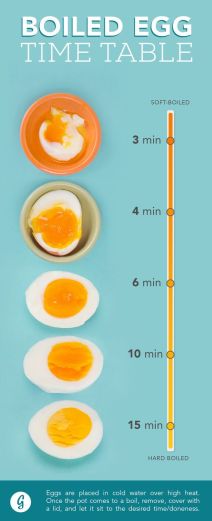
  • The biggest kitchen error I make is boiling eggs!  Inevitably they come out over done (you know, when the yolks are grey- ick).  I found a great graphic and list that will make cooking eggs the mindless task it should be!

eggtimingchartStep one: Place the eggs in a pot with cold water. Make sure there’s an inch of water above the eggs and don’t crowd them in. (Tip: Add vinegar to the water so eggshells are easier to peel)  Place the pot on the stovetop over high heat.

Step two: When the water starts lightly boiling around the eggs, cover the pot and move it to a burner that’s off or onto a potholder on the countertop.  Time to set the timer:

Three minutes: Whites are soft and slightly gloopy. Yolks are completely liquid.

Four minutes: Whites are set but soft and floppy. Yolks are still runny but a little more solid.

Six minutes: Whites are soft but firm. Yolks are smooth and pudding-like.

10 minutes: Whites and yolks are totally firm, but yolks are still creamy.

15 minutes: A completely solid, hard-boiled egg.

Remove from the hot water and place them into an ice-water bath for a minute to stop the cooking. Tap ‘em on the edge of the sink to gently crack and peel them open.

Are you on Facebook?  You might be interested in the things I may not devote an entire blog post to: recipes, food facts, nutritional information, photos and other things that make my mouth water. I may not write a blog post every day, but there are daily updates to my This Girl Loves To Eat community at: https://www.facebook.com/ThisGirlLovesHerFood