


Realizing that #leftoverwine is an oxymoron, the occasion did present when a high quality bottle was opened at the end of a multi-bottle evening and not finished, then said bottle was put into the wine cellar and forgotten for a week past it’s drinking window. Shit!
Time to make some red wine vinegar! I left the bottle, corked, in the dark, cool cellar for an additional month then set to starting my kitchen #chemistryexperiment.
Vintage Red Wine Vinegar
- Up to 750 ml leftover Red Wine of any variety – in this case, I used: 3/4 bottle Eighty Four Wines 2013 Malbec out of Napa, CA + about 1/4 bottle Bodega Y Vinedos Catena 2019 Malbec out of Argentina
- 1/2 tsp (2.5 ml) 3% Hydrogen Peroxide (if wine contains sulfites)
- 1 cup (237 ml) Unchlorinated Water
- 1/2 cup (118 ml) Raw, Unfiltered, Unpasteurized Vinegar, or a Vinegar Mother – I used Bragg Organic Raw-Unfiltered Apple Cider Vinegar With the Mother
Pour the wine into a dry, sanitized, wide-mouthed, sealable (canning) jar that holds at least a quart. If the wine contains sulfites (it will say so on the back of the bottle), stir in the hydrogen peroxide and let the wine sit for about a minute to neutralize them. Stir in the water with a wooden spoon.
Stir in the raw vinegar well to oxygenate the wine.
Cover the jar with either tightly-woven, quadrupled cheesecloth or a piece of muslin, even a thick paper towel, securing with rubber band/string/a screw on metal canning band, or, like I used, 😉 a zip tie to keep fruit flies out. You can cover it with a paper coffee filter for extra protection from fruit flies if desired. The jar needs to breathe (vent its Carbon dioxide) so do not, under any circumstances, put the metal inner jar canning lid or glass clamped vacuum lid on to seal.
Place your jar on the counter, out of direct light, or in a cupboard, where the temperature stays between 65° and 75°F. The longer you leave it alone to fully develop it’s acidity, especially if you have blended more than one type of wine, the better. Ideally, leave it alone a minimum of one month before checking your acidity level. Your ph should be 4.0 or below.
Bottle half of the vinegar, in a pressure resistant bottle, leaving headspace and replace with the same amount of wine for another batch. Or, you can bottle it all, storing the mother (1/2 C) for another batch or to share with a friend to make her own.

The vinegar can be used immediately (stored in the refrigerator if you like the flavor as it is) or aged longer in your cupboard or on the cool counter top to allow it to mellow further and the flavors to develop more fully.
- Troubleshooting: Most fermenting problems with vinegar come from trying to ferment in temperatures that are too warm for the fermentation process. Try to keep your jars in a room that’s between 55 and 75°F.
- Surface growth: If you see anything “scummy” starting to grow on your vinegar while it’s fermenting, scoop off the surface growth. If it smells fine, it is fine.
- Over-Fermenting: If your vinegar develops an awful smell (like rotting garbage), toss it out. If it smells a little funky (like vinegar), it’s probably fine.
- Mold Growth: If you’re having problems with mold growing on the vinegar (not simply white scum on the top), toss out the vinegar. Next time, make sure your vinegar is fermenting in a room that’s not above 75 degrees, and is in a place with good airflow.
Are you on Facebook? You might be interested in the things I may not devote an entire blog post to: food news, recipes, food facts, nutritional information, photos and other things that make my mouth water. If so, visit my This Girl Loves To Eat community at: https://www.facebook.com/ThisGirlLovesHerFood

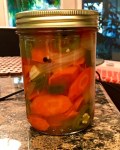 On a whim, I decided to make carnitas tacos for Valentine’s Day dinner at home. I didn’t have to worry about not thinking ahead because my pressure cooker would cook the meat even if it wasn’t all the way thawed in time. Whew!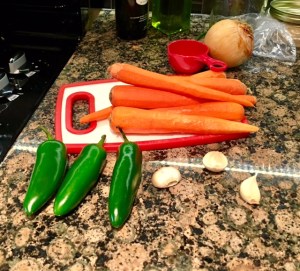

 When we’ve agreed to host the feast and bitten off a more than we could

 4 1/2 years ago I underwent a procedure to repair a broken sesamoid bone in my foot that had gone untreated, although I had sought help, for roughly two years. When I finally had the source of my pain identified it resulted in a screw being inserted in my foot but the doctor was a bit aggressive in his treatment, his expectations of recovery, and then difficult when the treatment and surgery proved unsuccessful. I had issues/side effects from medications he prescribed that resulted in weight gain that I still haven’t been able to shake and my foot hasn’t healed properly!
 To try and get ahead of this, the plan is to drink this concoction twice daily for the next three weeks to start flushing the anti-inflammatories (which thin my blood) and any other toxins out of my system, increase my hydration by trying to drink at least a gallon of water a day and stick to protein shakes for the 2 days immediately preceding the surgery. I’m going to show my husband how to make this drink for me so that I can flush the medications and anesthesia out of my system after surgery so I can start feeling better as quickly as possible.
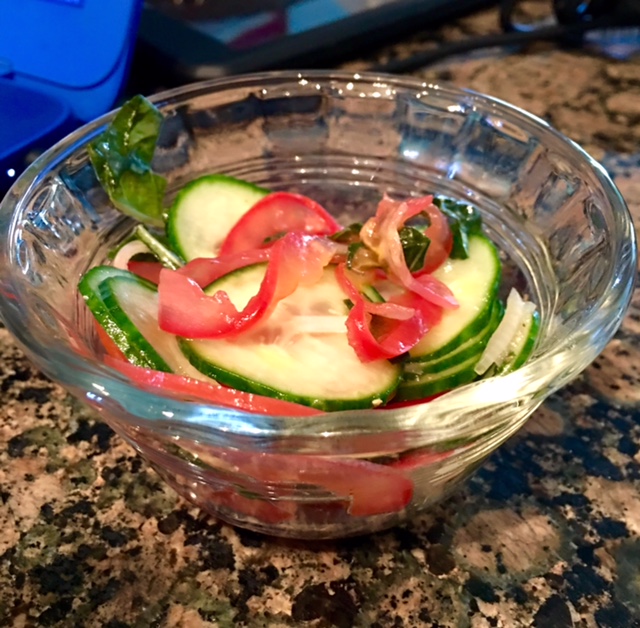 I wish I had all day to experiment in the kitchen, but that is one luxury I do not have.
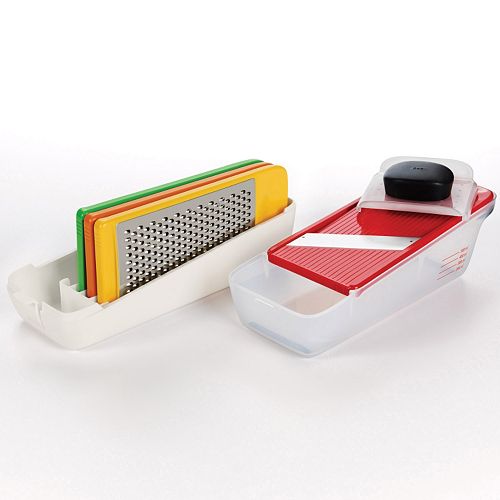 I really am trying to cut back on the carbs, fat and extra calories in our diets, so a cold salad I could marinate all day would be just the right choice! Plus, I’d get to use my new kitchen tool: my OXO slicer/grater.
 This Girl Loves to Eat!