
 Matcha tea is nothing new. By the 9th Century, the custom of drinking tea, first for medicinal, and then for pleasurable reasons, was practiced throughout China. Buddhist influenced Chinese author Lu Yu wrote The Classic of Tea, a treatise on tea focusing on the Zen-Chan school of cultivation and preparation. Zen Buddhist Monks drank Matcha tea to remain calm and alert during long hours of meditation. His ideas would have a strong influence in the development of the Japanese tea ceremony as it is still practiced today.
The Japanese tea ceremony involves “sabi” and “wabi” principles.
- Wabi represents the inner, or spiritual, experiences of human lives: quiet or sober refinement, or subdued taste “characterized by humility, restraint, simplicity, naturalism, profundity, imperfection, and asymmetry” and “emphasizes simple, unadorned objects and architectural space, and celebrates the mellow beauty that time and care impart to materials.”
- Sabi represents the outer, or material side of life. Originally, it meant “worn,” “weathered,” or “decayed.” Particularly among the nobility, understanding emptiness was considered the most effective means to spiritual awakening, while embracing imperfection was honored as a healthy reminder to cherish our unpolished selves, here and now, just as we are – the first step to “satori” or enlightenment.
Between 2013 and 2014 there was a 253% increase in sales of drinks containing Matcha, but I can’t help but wonder why? It’s not like people were all of the sudden sitting down to celebrate the traditional Japanese ceremony every time that they drank it, it was (and continues to be) sold diluted, mixed with flavors and preservatives and pre-bottled for drinking on the run.
So why all of the Matcha Hype?
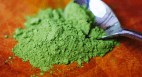 Matcha is a tea rich in catechin polyphenols (the most important of which is EGCG – epigallo-catechin gallate) compounds with high antioxidant activity, that also contains trace minerals and vitamins (A, B-complex, C, E, and K).
Matcha tea has a significant amount of dietary fiber and practically no calories. With its abundance of these vitamins and compounds, it is also said to:
- Protect against many kinds of cancer;
- Can slow or halt growth of cancer cells;
- Protect against cardiovascular disease;
- Slow the aging process;
- Boost metabolism;
- Reduce LDL “bad” cholesterol;
- Stabilize blood sugar levels;
- Help reduce high blood pressure; and
- Boost resistance to many toxins.
This still doesn’t explain to me how something commercially bottled, and (let’s be honest here) containing a much lesser quality and quantity of the desired Matcha tea powder is flying off the shelves…
Body Builders, heath and fitness gurus and those who practice meditation rituals all swear that Matcha is essential to reaching their peak potential because:
- Japanese tea leaves (those used to produce Matcha powder) grow in the shade to increase chlorophyll content. These chlorophyll-rich leaves are then handpicked, steamed, dried and ground into a fine green powder;
- Chlorophyll is purported to detoxify the body of toxins, heavy metals, poisons, dioxins and hormone disrupters;
- Matcha contains three times the caffeine as coffee but without the jittery buzz, instead inducing an “alert calm” due to it’s naturally derived l-theanine, which relaxes without drowsiness;
- One cup of Matcha green tea has as many antioxidants as 10 cups of regular tea
- A 2003 University of Colorado study confirmed that drinking 1 cup of matcha green tea has 137 times the amount of antioxidant EGCG compared to a conventional cup of green tea;
- Matcha green tea possesses antioxidant levels 6.2 times that of goji berries, 7 times that of dark chocolate, 17 times that of wild blueberries and 60.5 times that of spinach;
- Matcha, when combined with meditation, contributes to the health and weight loss benefits – reduces cortisol (a stress hormone that drive appetite and increases belly fat), lowers inflammation (tied to premature aging and disease), curbs impulsive eating, lowers blood pressure, and boosts self-esteem;
- Matcha green tea contains up to 5 times more L-theanine than conventional green tea and increases Alpha wave activity in the brain. Stress is known to induce the brain’s Beta wave activity, leading to a more agitated state. Alpha wave activity can relieve stress, promote relaxation and even lower blood pressure;
- Consuming green tea increases thermogenesis (the body’s rate of burning calories) from 8-10% to 35-43% of daily energy expenditure;
- Exercising immediately after drinking Matcha green tea resulted in 25% more fat burning during exercise
Bodybuilding.com shakes their pom-poms for Matcha in their own unique way: “If you’re not drinking Matcha green tea yet, you’re behind the times! Get with the program and try this metabolism-enhancing, stress-reducing, immune-boosting, cholesterol-lowering, teenage-mutant-ninja cancer fighter!”
Health Magazine warns that the taste of Matcha is strong, sometimes described as grassy or spinach-like. This explains why it is often watered down and/or sweetened, and even added to foods to improve it’s taste. To avoid the grassy taste do not add Matcha green tea powder to boiling water. Boil the water and let it sit for 5 minutes before adding the tea.
So, I’m convinced enough by the purported benefits to give this a try. One area in particular that appeals to me is that I have difficulty sleeping at night and it could be due to my consumption of green tea, but not the Matcha variety.
Quality is important if you want the reported results, and quality doesn’t come cheap. High quality, fresh, pure Matcha is expensive. A low price tag can be a red flag for a poor quality product, and, as with anything that is touted as the newest trend, it can be overdone, so ingest it in moderation.
Are you on Facebook? You might be interested in the things I may not devote an entire blog post to: recipes, food facts, nutritional information, photos and other things that make my mouth water. I may not write a blog post every day, but there are daily updates to my This Girl Loves To Eat community at: https://www.facebook.com/ThisGirlLovesHerFood


 There are many foods I didn’t know could be frozen, saving me from the inevitable time when I need something like buttermilk, which I never have on hand when I come across a recipe that calls for it. Learning this led me on an internet search to see what other seldomly stocked foods can be frozen for use later.
 After another Southern California winter week with temperatures over 80 degrees, I was looking for any excuse to make soup. Today the Santa Ana Winds blew in and dropped the temperature to a “Brisk” 69 degrees so I rushed to get the pressure cooker and Vitamix working so I could enjoy my favorite cool night meal:
 This Girl Loves to Eat!